Skip to content
Precision Thermal Management

Custom Cooling for Laser and Optical Modules

We develop custom cold plates, machined fluid parts and liquid cooling modules for laser and optical equipment. Component design is based on the heat load, installation space and coolant conditions, with temperature-control requirements agreed with your equipment team.

Discuss Laser or Optical Cooling
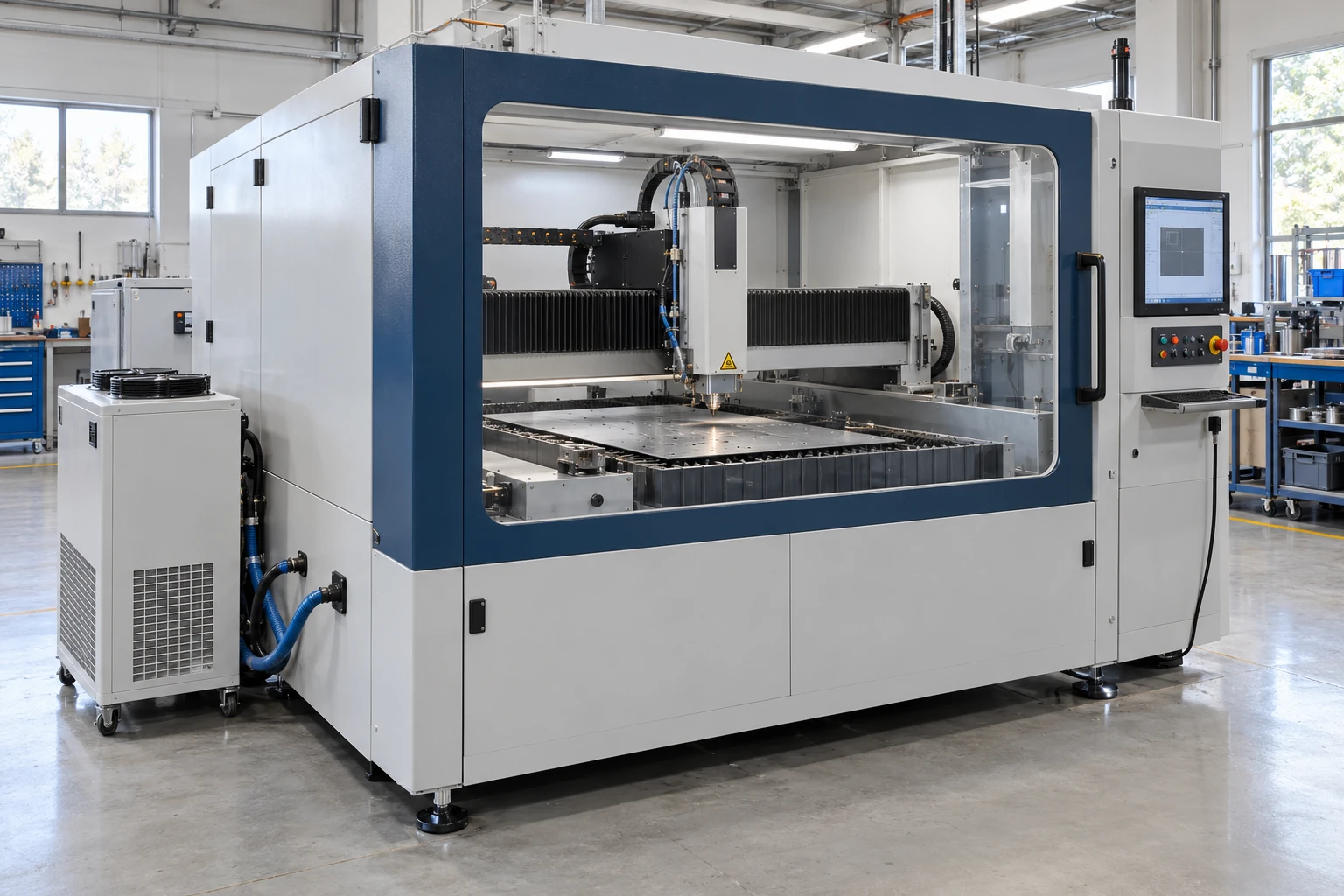
Illustration of an enclosed laser processing workstation with a cooling unit

Separate Heat Removal from Temperature Stability

Removing heat prevents overheating; maintaining a narrow temperature range also requires suitable sensors, controls and coolant conditions. These requirements determine the cooling arrangement.

Heat removal

Define the heat load, device temperature limit, ambient, coolant and heat-rejection conditions used to move heat out of the equipment.

PRIMARY QUESTIONS
  • How much heat is produced, and for how long?
  • Where does heat enter the cooling interface?
  • What inlet temperature and flow window are available?

Temperature stability

Add uniformity, drift, warm-up, transient response, sensor location and control behavior. A cold plate alone cannot guarantee beam or optical performance.

PRIMARY QUESTIONS
  • Which temperature is controlled and where is it measured?
  • What stability window and response time are required?
  • How do ambient, vibration and condensation affect the result?

Compare Cooling Arrangements

The table explains common system options. Our supply focuses on custom cold plates, fluid parts and cooling modules; TECs, chillers and optical controls are separate unless expressly included.

ArchitectureUseful starting conditionStrengthIntegration requirements
Passive conductionLower heat load with a stable structure and available heat sink.No pump or fluid loop at the device.System owner must provide a reliable heat-rejection path.
TECBidirectional temperature control near a sensitive device.Can heat or cool around a target.Requires controller, sensors and heat rejection for the TEC hot side.
Ambient liquid loopHigher heat load with coolant above the local dew point.Moves heat away from a compact or sealed area.Flow, pressure, materials, vibration and external heat rejection must be defined.
Cold plate + chillerHeat removal and controlled coolant temperature are both required.Centralizes fluid-temperature control.Chiller capacity, stability, water quality, condensation and controls remain system decisions.
Multi-port copper cold plate for precision fluid interface review

Cold-Plate Contact, Mounting and Fluid Connections

We review the heat-source contact area, mounting forces, coolant path and tube connections together. These details affect heat transfer, fit and the surrounding optical assembly.

  1. Heat-source footprint, contact surface, flatness and interface material.
  2. Mounting points, force, equipment distortion and optical keep-outs.
  3. Flow path, pressure drop, port direction and external-loop limits.
  4. Wetted materials, coolant compatibility, corrosion and cleaning requirements.
  5. Tubing support, pump location, pulsation and equipment vibration sensitivity.
  6. Orientation, filling, bleeding, drainage and service sequence.
  7. Ambient, humidity, dew point and condensation controls.
  8. Sensor locations, control ownership and acceptance method.

Cooling Components and Equipment Integration

We agree the parts and assembly to be supplied. Your equipment team specifies the temperature-control and optical requirements and validates the finished equipment.

ThermalBro components and records

  • Agreed cold plate or machined fluid part
  • Project-defined tubing, connections or module assembly
  • Applicable component drawings and test records

Interfaces we agree with your team

  • Heat load and controlled temperature
  • Coolant, flow, pressure and port conditions
  • Mechanical mounting, sensors and acceptance criteria

Equipment and external systems

  • Laser source, optics and beam path
  • TEC, controller, chiller and system software unless agreed
  • Laser safety, optical performance and final equipment validation

Component Tests and Operating Conditions

Test results need defined heat loads, coolant temperature, flow and measurement points. We agree component checks; your equipment team verifies temperature stability and optical performance in the finished system.

QuestionComponent checksConditions to recordSystem follow-up
Does the part fit and contact correctly?Dimensions, surface or flatness checks and assembly identity.Drawing revision, fixture, mounting and measurement method.Customer confirms the optical/mechanical assembly.
Does the fluid path meet the requirements?Leak or pressure check and project-defined flow/pressure-drop test.Coolant, temperature, pressure, duration and acceptance criteria.Loop owner confirms pump, chiller and operating range.
Does it move heat as intended?Project-defined temperature map, thermal resistance or transient data.Heat fixture, load, sensors, inlet temperature, flow and ambient.OEM validates the real laser or optical device.
Are stability risks managed?Selected temperature, vibration or environmental checks when agreed.Control method, bandwidth, mounting, orientation and dew point.OEM validates beam, wavelength, alignment and system safety.
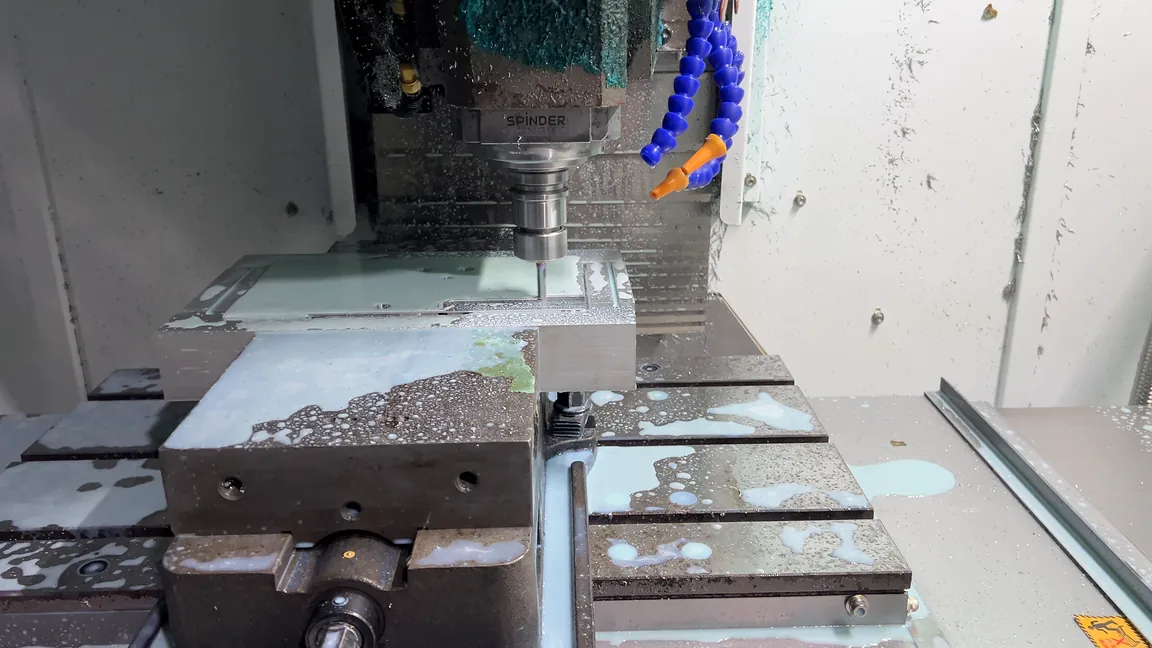
CNC milling of a cold plate workpiece with coolant on the fixture.
Precision machining
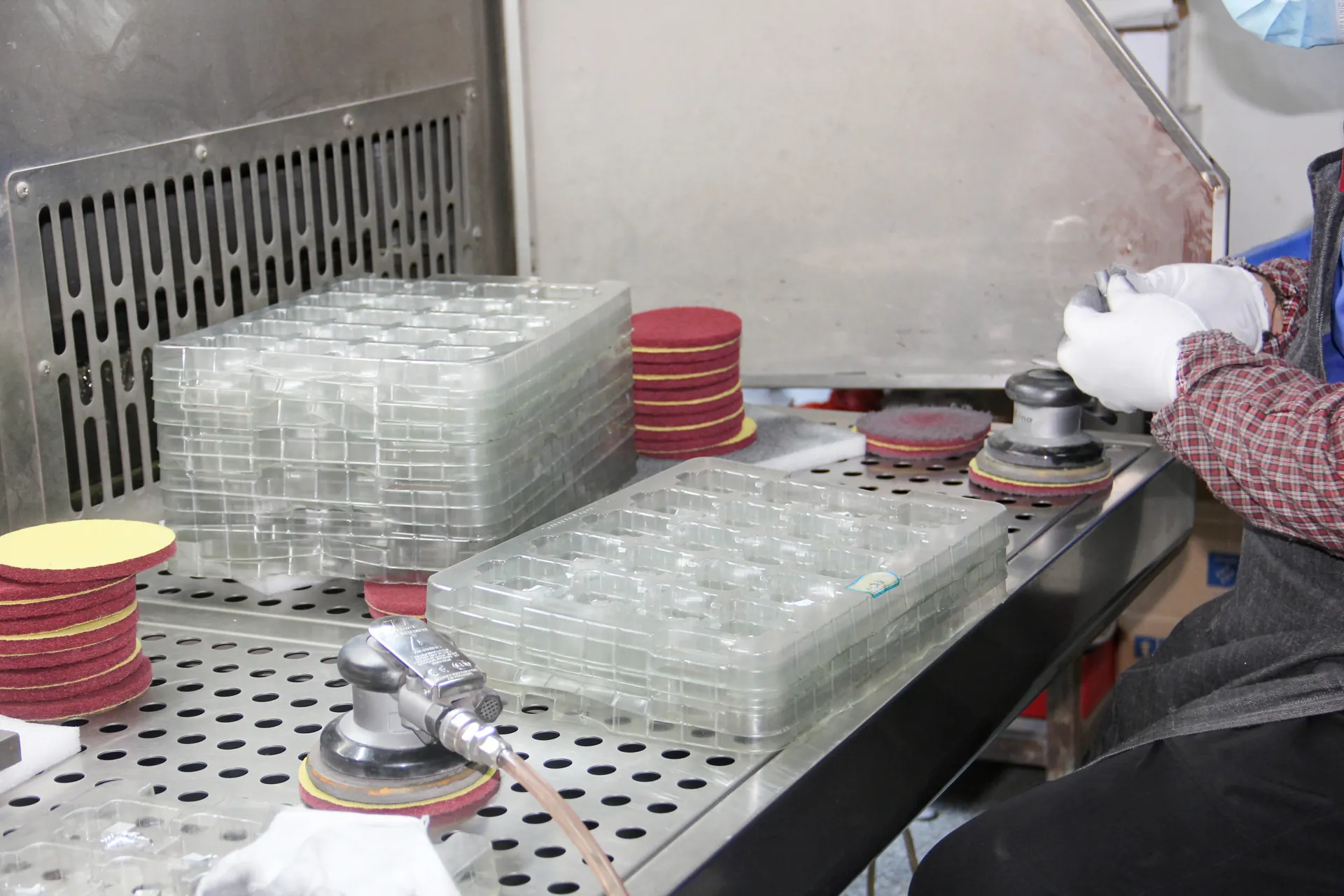
Surface finishing of a cooling component
Surface and cleanliness process
Liquid cooling pump and flow test equipment
Project-defined fluid testing

Review CNC Machining · Review Testing & Reliability

Laser and Optical Cooling FAQ

Answers about temperature stability, external cooling equipment and integration requirements.

Is heat removal the same as precision temperature stability?
No. Stability also depends on uniformity, sensors, control, coolant stability, environment, mounting and dynamic response.
Does ThermalBro supply the laser, TEC, controller or chiller?
Our standard scope is cold plates, machined fluid parts, tubing and cooling modules. Laser sources, TECs, controllers and chillers are not included unless expressly agreed.
How are coolant and water-quality requirements defined?
The loop owner defines chemistry, concentration, quality, temperature, flow, pressure and maintenance. We review materials and component conditions against that specification.
How is condensation risk handled?
Surfaces below the local dew point can collect condensation. Your equipment team should define humidity and operating conditions so surface-temperature limits, insulation, drainage and protective controls can be addressed.
Can a liquid cooling module be designed for low-vibration optical equipment?
We can evaluate the pump location, tube support, mounting and vibration requirements. Performance must be checked using the agreed equipment setup and measurement method.
What cleanliness or material information is needed?
Provide coolant, restrictions, contamination limits, cleaning, wetted-path, storage and handling requirements and the required evidence.
Does a cold-plate test certify laser safety or optical performance?
No. The equipment manufacturer remains responsible for laser safety, alignment, beam performance and complete-system validation.

Discuss Cooling for Your Laser or Optical Equipment

Share the heat-source layout, temperature target and available coolant conditions. We will review the parts, connections and component tests needed for your application.

  • Heat-source map and load cases
  • Target temperature, uniformity and stability
  • Ambient, humidity and dew point
  • Coolant, flow and pressure window
  • Mounting, space and vibration limits
  • Sensors, control and acceptance method
Request a Laser or Optical Cooling Review