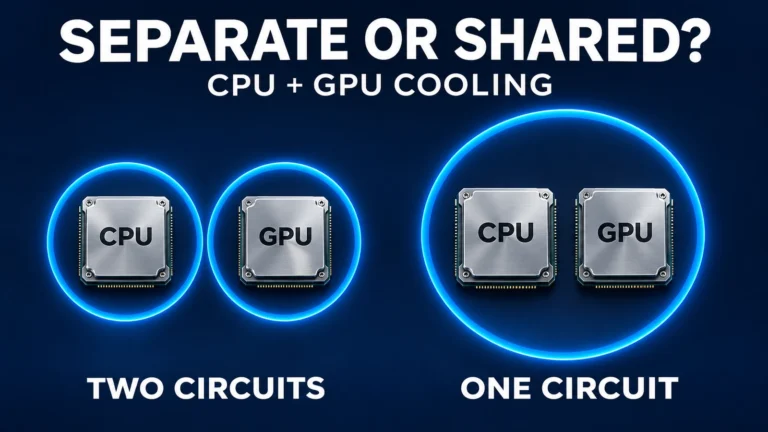
You can issue an initial liquid cooling RFQ before measured power data is available, provided the request separates confirmed requirements from provisional heat-load assumptions. Ask for a conditional concept or budgetary quotation, define how the unknowns will be resolved, and state which decisions must wait for validation.
An unsupported wattage in a spreadsheet can quietly become a radiator selection, a price commitment and an acceptance target. The purpose of the RFQ is to prevent that chain from becoming invisible. A useful assumption has a source, a scope, an owner and a condition that triggers review.
Identify which power boundary is missing
Start with the object being measured or estimated. Wall input, power-supply output, device electrical power and heat entering the coolant are different boundaries. A whole-system reading includes loads and losses that may be removed by air rather than by the proposed cold plate. Conversely, a processor figure may omit memory, power conversion or another device included in the cooling scope.
Identify the missing load through three input groups:
- Source and scope. List each device and whether the proposed cold plate or airflow removes its heat.
- Geometry. Record contact area, source locations and the mechanical revision.
- Evidence. Distinguish electrical input from heat assigned to the coolant, with the method and uncertainty behind that allocation.
The same total wattage can produce a different local-temperature problem after source area or distribution changes. Use the cold-plate design scope to connect those inputs to the part geometry.
Record duration and concurrency. A brief peak is not a continuous load, but it cannot simply be ignored: the permitted temperature response depends on the complete thermal system and control behavior. If CPU and GPU peaks are not known to overlap, label that uncertainty instead of silently assuming either perfect overlap or none.
Use available specifications without calling them measurements
Manufacturer data is a starting point when its model, revision and operating conditions match the intended equipment. Preserve the original term and its definition. A nominal rating, a configured power limit and an application measurement should occupy different fields in the RFQ.
For example, Intel’s explanation of processor TDP distinguishes a steady design target from power behavior under turbo or certain workloads. That distinction is a reason to check the exact processor documentation and settings; it is not a universal conversion from TDP to cooling load.
A component name alone is insufficient. Firmware settings, power limits, hardware revisions and the intended workload may change the conditions. For an existing platform, request logs from a comparable configuration and record what differs. An analogous system is useful evidence for planning, but it does not become a measurement of the new system.
Classify the evidence currently available
Swipe the table horizontally to compare all columns.
| Input currently available | Appropriate RFQ treatment | Missing evidence to identify |
|---|---|---|
| Manufacturer power specification | Quote exact term, model and documented conditions | Whether project workload and settings match |
| Similar-platform measurement | Label as reference evidence, not the new design result | Hardware, firmware and environmental differences |
| Whole-system electrical reading | State measurement boundary and included loads | Allocation between coolant and other heat paths |
| Engineering estimate | State method, assumptions and range | Measurement or analysis needed to replace it |
| No usable evidence | Mark unknown and request a discovery step | Owner, equipment and date for obtaining data |
Write an assumption that another person can challenge
A provisional wattage needs a record another engineer can challenge:
- Object and case. Assembly revision, load state, duration and concurrency.
- Source and status. Documented specification, reference measurement or estimation method; name the limitations.
- Decision and owner. Identify what may proceed, what remains conditional and who provides the missing evidence.
- Closure trigger. Set the measurement/review milestone and the changes that require a revised assessment.
Separate a working estimate from a bounding case. The former supports an early concept under stated expectations. The latter explores the consequence of a higher or otherwise more demanding condition. A bounding case needs a rationale, such as a documented configuration limit or an identified load combination. An arbitrary percentage is not automatically an engineering safety margin.
Also separate uncertainty in power from uncertainty in inlet temperature, available airflow, flow rate, contact geometry and allowed device temperature. Increasing the wattage estimate does not compensate transparently for all of those missing inputs. It can produce a larger assembly while leaving the actual limiting interface unresolved.
From inputs to a defensible decision
Known specification or reference measurement
↓ Preserve the original boundary and conditions.
Working estimate and justified bounding case
↓ Record the affected decision and its owner.
Measurement, review and revision
↓ Replace the assumption with approved evidence.
Connect each unknown to a decision and a responsible owner
An assumption register is useful only if it changes how the project proceeds. For each unresolved item, identify the decision at risk: cold-plate concept, radiator envelope, pump selection, price, delivery sequence or acceptance criteria. Then name the party that can provide the missing evidence and the milestone before which it is needed.
The equipment OEM normally owns the intended application, hardware configuration and workload. The module supplier can assess its agreed scope against supplied conditions. A test laboratory or system integrator may collect measurements, but the team still needs an owner who approves their relevance to the final design. “Supplier to confirm” is incomplete when only the customer can define the application.
Use the OEM module development guide to place those decisions before the relevant interface freeze, prototype or release milestone. Some mechanical work can continue while load data is pending. Thermal commitments or tooling decisions that depend on that data need an explicit hold or agreed conditional basis.
Make conditional quotations comparable
Ask each bidder to identify the heat-load basis it used, what is included and what remains conditional. Otherwise one price may include thermal characterization and another may assume a fully defined design. Comparing only the total can reward the quotation that hides more unresolved work.
Request separate scope descriptions for initial engineering, prototypes, validation and production supply. Define who supplies fixtures, instruments, test hardware and the final application workload. If a heater fixture is proposed, state what it reproduces and what it cannot reproduce about actual device contact, spatial heat distribution or dynamic behavior.
Agree what happens if the evidence changes. A new load case may require a different radiator, cold plate, pump or mechanical layout, with corresponding cost and schedule effects. Avoid a clause that treats every unknown as unlimited supplier responsibility, or one that permits any change without notice. Specify review, impact assessment and approval of the revised baseline.
Tie quotation decisions to closure rules
Swipe the table horizontally to compare all columns.
| RFQ decision | Provisional basis to disclose | Closure or change rule |
|---|---|---|
| Initial concept | Defined workload estimate and inlet conditions | Reassess when verified conditions become available |
| Prototype scope | Questions the sample is intended to answer | Record configuration and limits of the result |
| Price comparison | Engineering, hardware and test inclusions | Compare equivalent scope before selection |
| Mechanical freeze | Interfaces supported by current evidence | Review dependent dimensions if thermal concept changes |
| Production acceptance | Agreed conditions and measurable criteria | Release only after required validation and approval |
Plan measurements that can replace the assumption
Plan a measurement that can close a specific assumption:
- Freeze the configuration. Record hardware/firmware revisions, power settings, sensor locations, instrument method and fluid or air inlet conditions.
- Run the relevant cases. Capture the application’s sustained sequence and required transitions with a defined stabilization criterion. Retain the time history rather than only a maximum screenshot.
- Review against the provisional basis. Compare the measured boundary and conditions with the estimate. Explain discrepancies, identify affected design decisions and approve the revised record.
If the measured load is lower but the inlet condition is worse, do not close the assumption on watts alone. The thermal owner must assess the combined condition.
If heat entering the liquid is estimated from coolant flow and inlet/outlet temperature difference, record the actual fluid properties and measurement uncertainty. That energy balance can describe the measured fluid boundary under suitable conditions. It does not automatically establish junction temperature, local heat flux or the accuracy of an electrical power estimate.
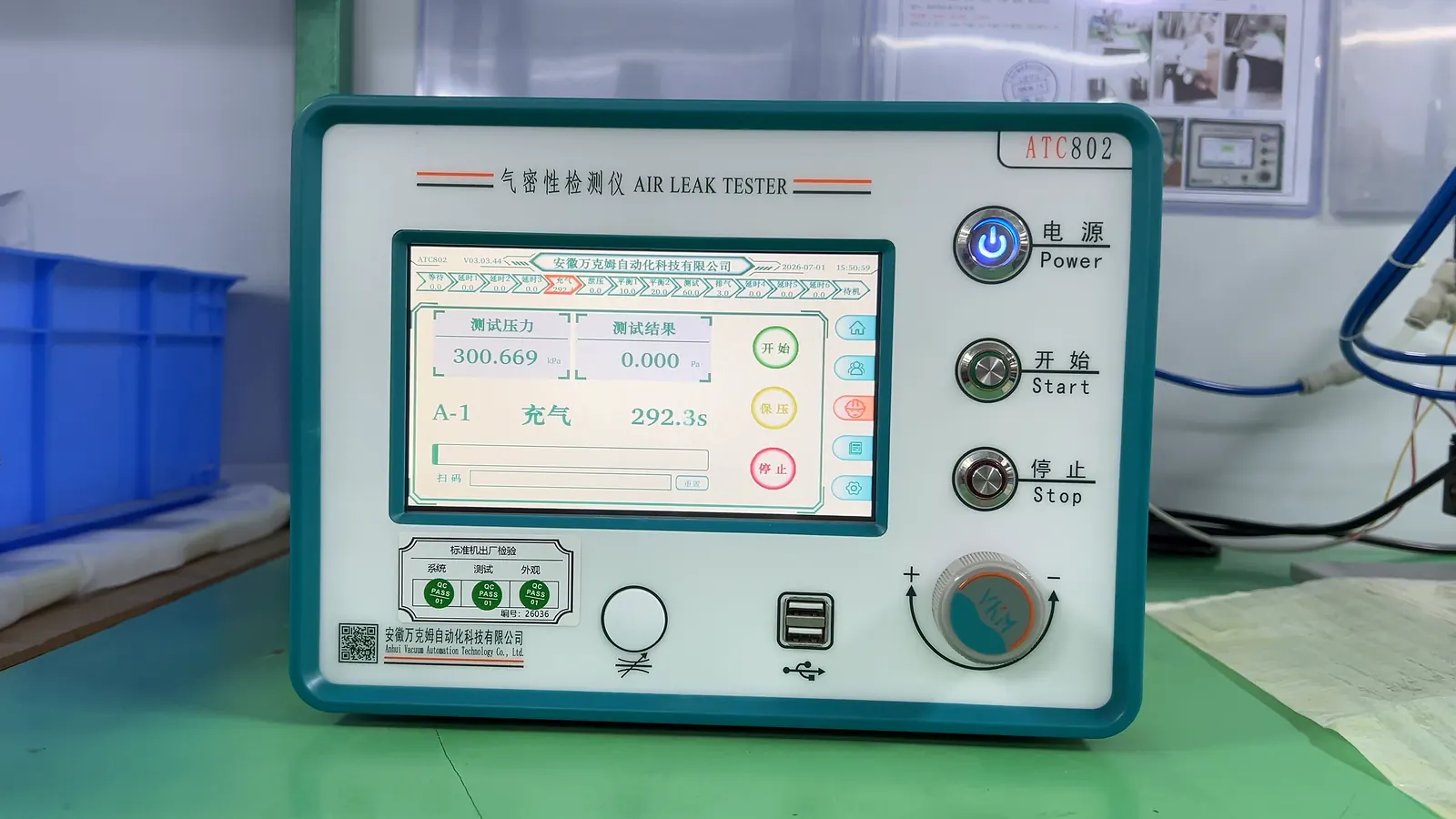
The distinction matters when reviewing supplier evidence. A leak-test pass cannot close an unknown heat load, and a thermal run cannot replace the required leak checks. ThermalBro’s testing and reliability scope is a starting point for agreeing the required test package, not a substitute for the project-specific record.
Walk one incomplete RFQ through the process
Consider a hypothetical OEM with a processor specification, a preliminary chassis drawing and no application power log. It wants a firm module price and guaranteed temperatures. The available inputs can support an initial scope discussion, but they do not yet establish the intended workload or installed heat-rejection conditions.
The OEM records the processor specification as a reference, assigns its application team to capture the relevant workload, and provides the expected chassis intake conditions as a provisional input. The supplier describes a candidate module envelope and identifies the decisions that depend on those inputs. Both sides agree what the first prototype will check and what would trigger a revised quotation.
When measurements arrive, the team compares them with the assumed cases rather than simply replacing a spreadsheet cell. If the sustained load is lower but intake air is hotter, the concept may still need review. If the cold-plate contact layout changes, the same total power does not preserve the previous validation. Close each assumption with the evidence, decision and approved revision.
Questions before sending an incomplete-power RFQ
Should the RFQ wait until every measurement exists?
No. Early engineering and budget discussions can proceed with transparent assumptions. State what decision the quotation supports and which commitments remain conditional, so procurement does not use a concept estimate as a production guarantee.
Is adding a fixed percentage enough?
No universal percentage covers uncertain load, contact, airflow and control behavior. Give each uncertainty an evidence-based treatment and have the responsible engineering team approve the resulting design basis.
What is the minimum useful package?
Send the known platform and drawing revisions, heat-source map, available specifications, intended workloads, environmental boundaries, quantities and milestones. Mark missing data with owners and closure dates. ThermalBro’s OEM/ODM engineering team can then discuss the defined module scope and the next evidence needed.